In behavioral healthcare, selecting an EHR and billing partner is one of the most important operational decisions a practice will make.
Unfortunately, many software companies still rely on the traditional “free trial” model. Practices receive access to a system, click around for a few days, and then are expected to make a long-term decision based on limited experience.
We believe there is a better way.
At DENmaar, we replaced traditional free trials with a structured Claims Submission Pilot Program.
Why Free Trials Often Fail
The reality is that most behavioral health practices do not determine success based on whether a scheduler looks attractive or a progress note can be completed.
Success is determined by questions such as:
- Are claims being paid?
- Are providers completing documentation on time?
- Is eligibility being verified correctly?
- Are authorizations being managed effectively?
- Is insurance revenue increasing?
- Is administrative burden decreasing?
A traditional free trial rarely answers these questions.
The Purpose of a Pilot Program
A pilot allows both organizations to determine whether there is a true operational fit.
Instead of evaluating screenshots and demonstrations, practices can evaluate real workflows using real providers, real patients, and real claims.
During a DENmaar pilot, organizations gain access to:
- Behavioral health EHR workflows
- Scheduling and appointment management
- Eligibility and benefits verification
- AI-powered clinical documentation tools
- Claims submission and behavioral health revenue cycle management
- Credentialing support
- Weekly implementation and optimization meetings
The objective is simple: validate results.
Measuring Success
By the conclusion of a pilot, leadership should have clear answers to several critical questions.
Clinical Operations
- Are providers documenting efficiently?
- Are notes being completed on time?
- Is clinical compliance improving?
Revenue Cycle Performance
- Are claims submitting cleanly?
- Are rejection rates decreasing?
- Are billing workflows becoming more efficient?
Organizational Fit
- Does the platform support the organization’s long-term goals?
- Can the system scale as additional providers are added?
- Does the support model align with leadership expectations?
Not Every Organization Is a Fit
One of the most important aspects of our pilot program is qualification.
DENmaar is designed primarily for organizations that are building or operating multi-provider behavioral health practices.
Organizations that are focused on growth, operational discipline, and insurance-based care typically receive the most value from our platform.
For that reason, we do not believe every inquiry should automatically receive a pilot.
We would rather identify strong mutual fit upfront than create unrealistic expectations for either organization.
Why We Built DENmaar
DENmaar was created around a simple belief:
Behavioral health organizations should not have to choose between great software and great billing support.
Most organizations purchase software from one company, credentialing from another, billing services from a third, and then spend countless hours coordinating between them.
We chose a different approach.
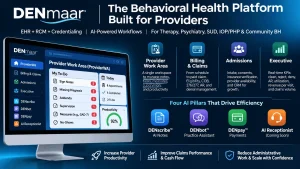
DENmaar combines behavioral health technology, revenue cycle management, credentialing, eligibility verification, and operational support into a single platform designed to help organizations improve efficiency and increase insurance revenue.
Organizations looking to strengthen their behavioral health insurance billing infrastructure can learn more about the 3 pillars of successful behavioral health insurance billing.
For practices serving Medicaid populations, understanding Medicaid billing behavioral health requirements is essential for reducing denials and improving reimbursement outcomes.
Many organizations also struggle when determining payer hierarchy and coordination of benefits. Understanding when Medicaid is not primary in behavioral health billing can prevent costly claim delays and rework.
Because at the end of the day, successful behavioral health organizations need more than software.
They need systems that produce measurable results.
Interested in a Pilot?
If your organization is a multi-provider behavioral health practice seeking to improve operations, strengthen revenue cycle performance, and scale efficiently, a DENmaar Claims Submission Pilot may be the right next step.
The goal is not to evaluate software.
The goal is to validate results.A Claims Submission Pilot Program allows behavioral health organizations to test real-world workflows, claims submission processes, eligibility verification, provider credentialing, and revenue cycle management before committing to a long-term platform.A free trial typically focuses on software access. A pilot focuses on measurable operational outcomes, including clean claims rates, documentation compliance, reimbursement performance, and administrative efficiency.Multi-provider behavioral health organizations, psychiatry groups, substance use treatment programs, and insurance-based practices typically receive the greatest value from a structured pilot program.Yes. The pilot is designed to support complex behavioral health reimbursement scenarios, including Medicaid billing, eligibility verification, authorization management, provider credentialing, and clean claims submission.A behavioral health EHR should support documentation, scheduling, eligibility verification, claims management, and reimbursement workflows. Without integrated revenue cycle management, practices often experience denials, delayed payments, and lost revenue.